
The Scent of Mata Hari: 1876 by Histoires de Parfums
Some fragrances smell beautiful.
Others tell stories.
1876 by Histoires de Parfums belongs firmly to the second category—a perfume built around one of history’s most seductive and tragic figures: Mata Hari.
Released in 2001 and created by perfumer Sylvie Jourdet, the fragrance explores sensuality not through modern sweetness or loud projection, but through:
spice,
powdered florals,
warm skin,
and restrained eroticism.
It feels less like a contemporary perfume and more like:
👉 a faded velvet room filled with perfume, smoke, silk, and secrets
Mata Hari: The Woman Behind the Fragrance
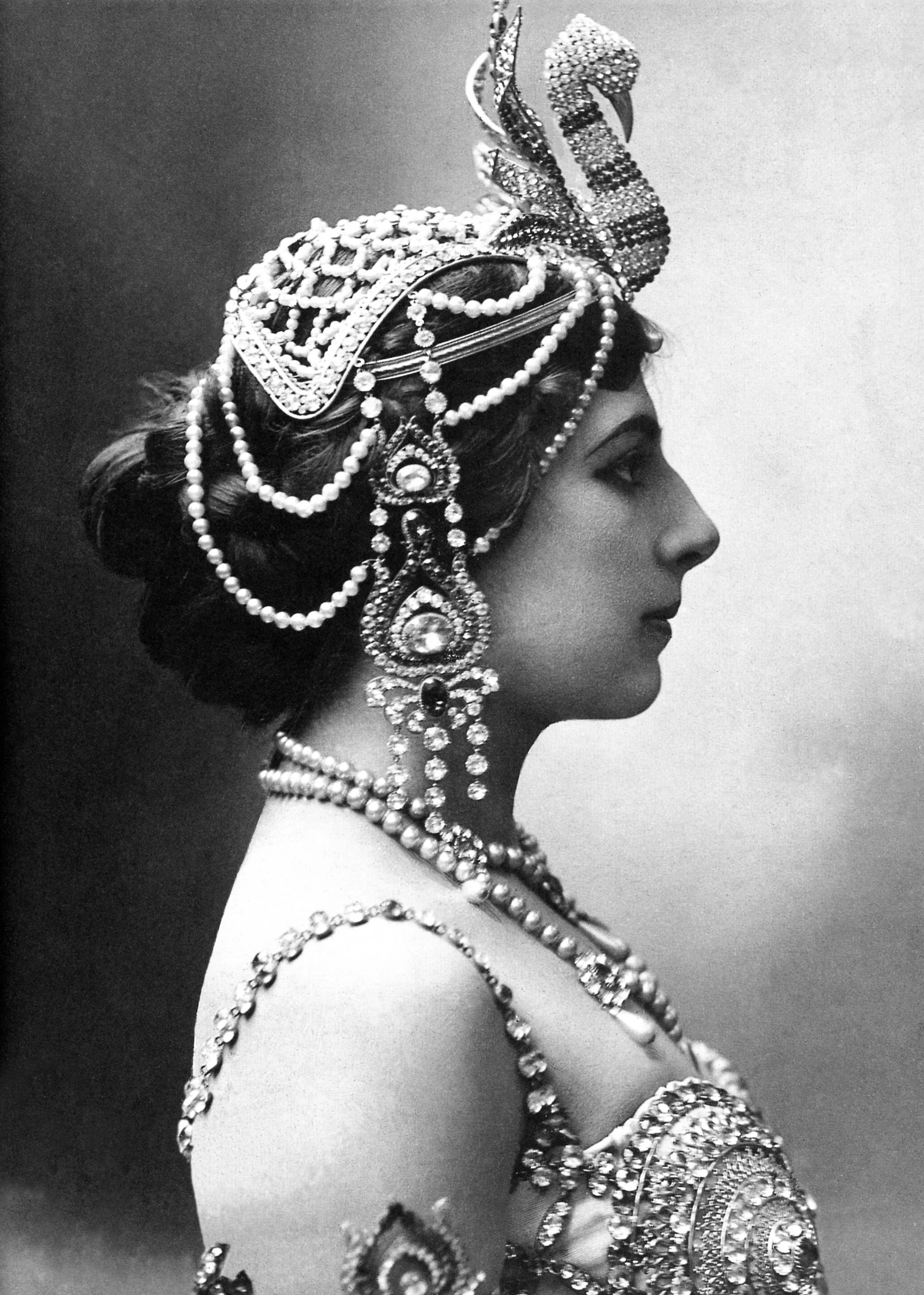
Born Margaretha Geertruida Zelle in 1876, Mata Hari became famous during the Belle Époque as an exotic dancer, courtesan, and eventually one of history’s most infamous alleged spies.
She cultivated an image of:
mystery,
sensuality,
theatricality,
and dangerous femininity.
Her life ended in tragedy in 1917 when she was executed by firing squad in France after accusations of espionage for Germany during World War I. Historians still debate the extent of her guilt.
That mixture of:
👉 glamour, sexuality, scandal, and melancholy
is exactly what 1876 attempts to capture.
A Fragrance Built Like a Historical Portrait
Unlike many modern rose fragrances, 1876 does not aim for freshness or realism.
Instead, it constructs an atmosphere:
powdery,
warm,
slightly dirty,
and emotionally charged.
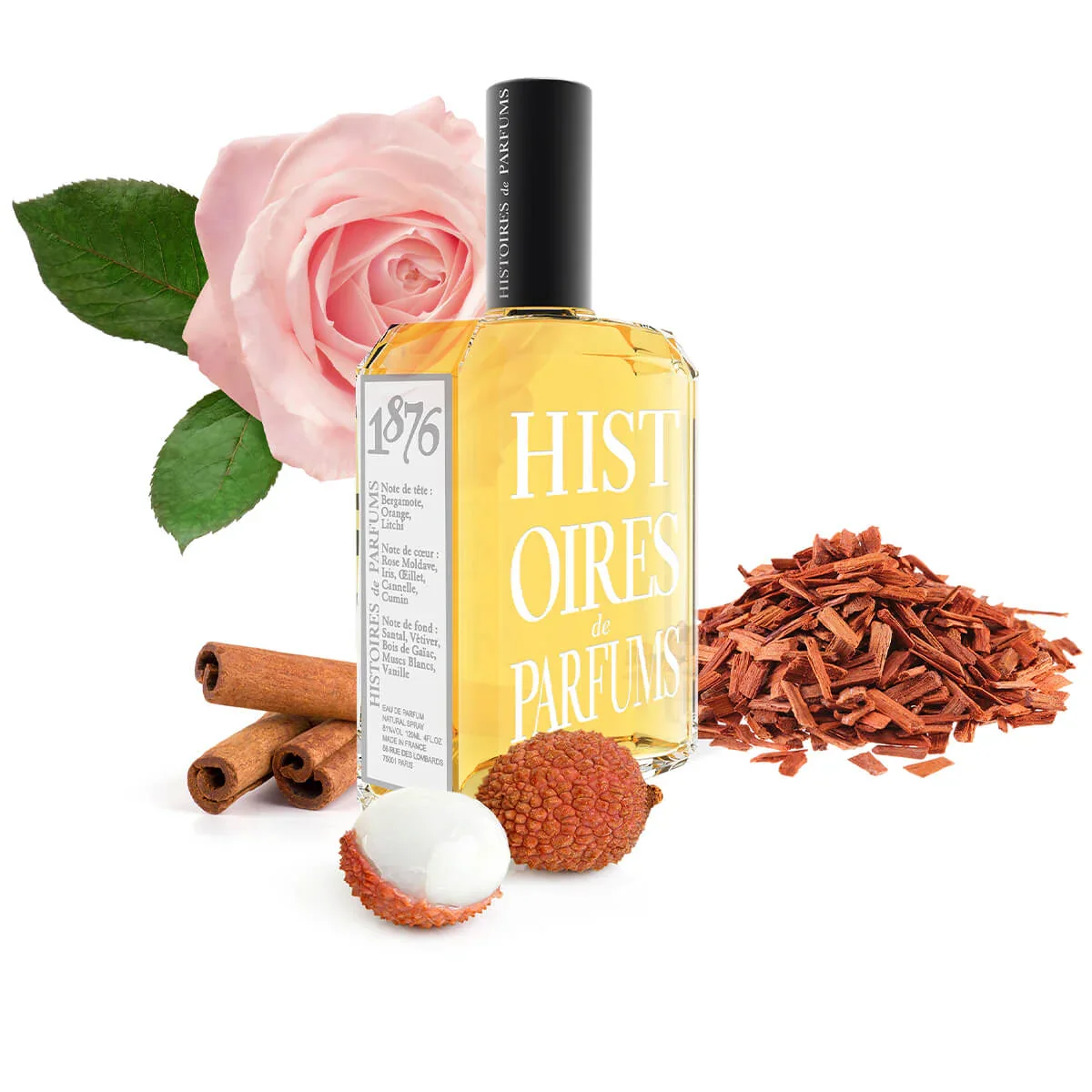
According to fragrance references, the composition includes:
lychee,
bergamot,
orange,
rose,
iris,
violet,
carnation,
cinnamon,
cumin/caraway,
sandalwood,
vetiver,
musk,
vanilla,
and guaiac wood.
👉 Main accords:
Spicy • Floral • Powdery • Woody • Warm
The Opening – Fruit and Heat
The fragrance opens with:
citrus brightness,
soft lychee sweetness,
and immediately emerging spice.
The lychee note is especially important.
Rather than turning tropical or playful, it creates:
👉 a humid, rosy fruitiness that bridges directly into the floral heart.
Several reviewers specifically mention how unusual and effective this transition feels.
The Heart – Rose in Powder and Skin
At the center of 1876 is rose—but not a fresh-cut rose.
This rose feels:
powdered,
warm,
slightly faded,
and intimate.
It’s surrounded by:
iris,
violet,
carnation,
cinnamon,
and cumin/caraway.
That last detail matters enormously.
The cumin note introduces:
👉 a subtle skin-like warmth that gives the fragrance sensual tension.
Not dirty exactly—
but undeniably human.
Elena Vosnaki described the fragrance as:
“passionate, yet tempered and neat.”
That balance may be what makes 1876 so compelling.
Powder, Spice, and the Belle Époque Mood
Modern perfumes often chase:
realism,
transparency,
or hyper-clean freshness.
1876 instead embraces:
👉 vintage glamour.
It smells like:
lipstick powder,
velvet opera seats,
old theatre curtains,
cinnamon dust,
and perfumed skin.
A Parfumo user described it beautifully as:
“A tipsy little rose danced in front of the mirror.”
And honestly, that image captures the fragrance perfectly.
The Dry-Down – Soft Woods and Melancholy
As the fragrance settles:
sandalwood softens the spice,
musk creates skin warmth,
vanilla adds subtle sweetness,
while vetiver and guaiac wood prevent the fragrance from becoming overly romantic.
The result feels:
👉 elegant but emotionally heavy.
Not cheerful.
Not innocent.
More like:
faded glamour,
exhausted beauty,
sensuality touched by sadness.
Which, perhaps, suits Mata Hari perfectly.
Why 1876 Still Feels Unique
Many modern “sensual” fragrances rely on:
loud sweetness,
heavy amber,
aggressive projection.
1876 achieves sensuality differently:
through texture,
warmth,
powder,
and suggestion.
It doesn’t seduce directly.
👉 It lingers, watches, and slowly reveals itself.
That restraint gives the fragrance a timeless quality.
Community Reputation
Within fragrance communities, 1876 has developed a quiet but devoted following.
Reviewers frequently describe it as:
mysterious,
vintage-inspired,
emotionally rich,
and unusually atmospheric.
Some compare it to:
old theatres,
classic lipstick scents,
or Belle Époque elegance.
Others praise the balance between:
rose,
spice,
and powdery warmth.
It remains somewhat underappreciated compared to louder niche releases—which somehow feels fitting for a fragrance about hidden identities and misunderstood histories.
Performance and Wearability
Community feedback generally describes:
moderate longevity,
soft-to-moderate projection,
and an intimate but persistent aura.
It performs beautifully in:
autumn,
winter,
evening settings,
and quiet formal environments.
This is not a casual fresh scent.
It asks for attention—
but softly.
Final Thoughts
1876 succeeds because it does not reduce Mata Hari to cliché.
Instead of creating:
an aggressively seductive perfume,
or a dark femme fatale caricature,
it creates something more nuanced:
👉 sensuality mixed with fragility, powder, nostalgia, and tragedy.
The fragrance smells like:
roses warmed by skin,
cinnamon in dim light,
lipstick on velvet,
and history remembered imperfectly.
And perhaps that is exactly how Mata Hari herself survives in cultural memory:
not as fact,
but as atmosphere.
FAQ
What does 1876 by Histoires de Parfums smell like?
It smells spicy, powdery, floral, and woody with rose, iris, cinnamon, cumin, sandalwood, and lychee.
Who was 1876 inspired by?
The fragrance was inspired by Mata Hari, the famous Dutch dancer and alleged spy.
Is 1876 a vintage-style fragrance?
Yes, it has a distinctly vintage, Belle Époque-inspired atmosphere.
Is 1876 a rose perfume?
Yes, but the rose is warm, spicy, and powdery rather than fresh.
Who created 1876?
It was created by perfumer Sylvie Jourdet.
Affiliate Disclosure
This article may contain affiliate links. If you buy through these links, we may earn a small commission at no extra cost to you.